If you are searching for a luxury home in Reno, style matters, but so does performance. A home may look stunning in listing photos, yet the real test is how it handles intense sun, dry air, snow, wind, and wildfire considerations. In Reno, the best architecture does all of that while still capturing views and creating a strong sense of place. Let’s take a closer look at what defines luxury home architecture here and what you should notice when you tour or build.
Why Reno Architecture Feels Distinct
Reno sits in the Truckee Meadows on the eastern slope of the Sierra Nevada, with Lake Tahoe and major ski areas within about 50 miles. That setting shapes luxury design in a very visible way. Homes here often aim to connect indoor living with mountain and valley views while also responding to a dry high-desert climate.
Reno also experiences relatively low annual precipitation, with NOAA and NWS normals showing 7.35 inches per year at Reno-Tahoe International Airport. Even so, snow still plays an important role, especially in foothill and higher-elevation areas. The National Weather Service notes that some foothill sites can receive two to three feet of snow when the valley floor gets about six inches.
That is why architecture in Reno is rarely just about appearance. Rooflines, materials, glazing, and landscape design all need to work with the site. In many luxury homes, the most successful design choices are the ones that look beautiful and hold up well in local conditions.
Mountain Modern Leads the Market
What mountain modern looks like
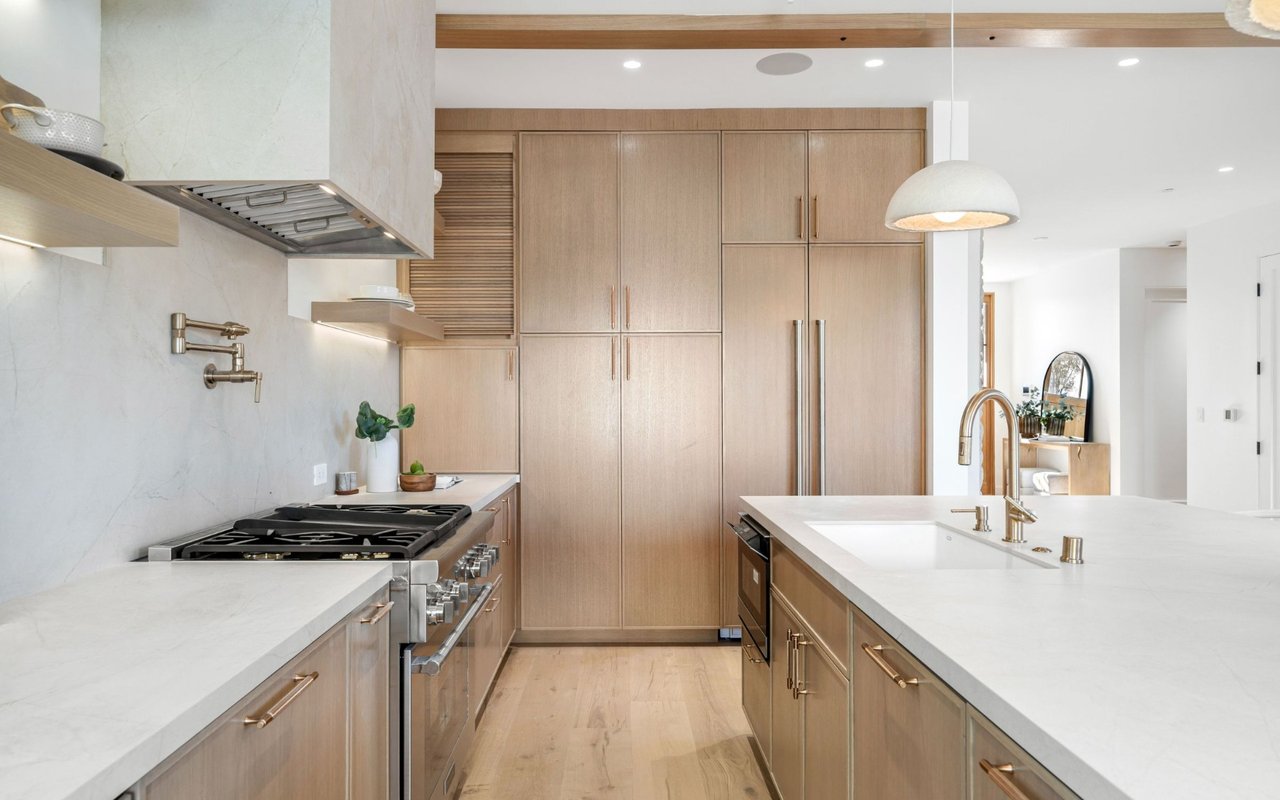
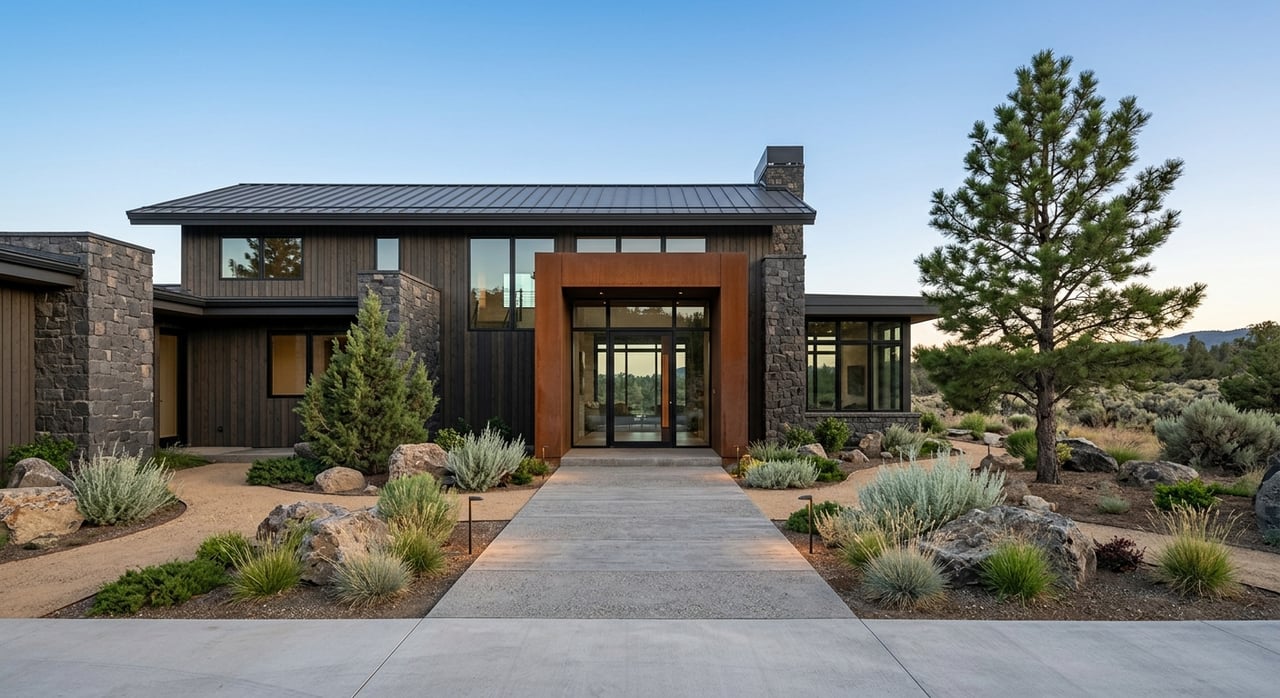
Mountain modern is one of the clearest style directions in Reno luxury homes today. You will often see expansive window walls, warm wood finishes, stone accents, exposed steel, and floor plans organized to bring in natural light and frame views.
This style tends to feel open and calm rather than ornate. Many homes use multiple wings, clean roof forms, and generous outdoor living spaces to create a strong connection between the house and the surrounding landscape.
Why it works in Reno
Mountain modern fits Reno because it balances drama with practicality. Large glass openings help showcase Sierra and valley views, while natural materials like cedar, walnut, and stone echo the region’s mountain-desert setting.
It also pairs well with site-sensitive design. Reno’s Master Plan encourages development that works with topography, respects views from surrounding public lands, and uses neutral colors that blend with the landscape. Mountain modern homes often follow that approach naturally.
Contemporary Homes Bring a Cleaner Edge
Defining contemporary luxury in Reno
Contemporary luxury homes in Reno usually lean into simpler massing, crisp lines, and broad areas of glass. Compared with mountain modern homes, they may feel more streamlined and more clearly minimalist.
These homes often feature resort-style outdoor spaces, strong indoor-outdoor flow, and a lighter visual touch. The result can feel polished and architectural without losing the connection to the land.
Reno’s modern roots matter
Contemporary design here is not just a borrowed trend. Reno has a local modernist precedent, including mid-century and international-style influences noted in City of Reno historic materials.
That history helps explain why modern homes can feel at home here. When done well, they reflect both current luxury preferences and a longer design language already present in the city.
Lodge-Inspired Homes Still Hold Strong Appeal
The classic mountain retreat feel
Lodge-inspired luxury homes remain popular in the Reno and Tahoe corridor for good reason. They often use natural stone, heavy timber, pitched roofs, vaulted ceilings, exposed trusses, and large windows that frame the outdoors.
These homes tend to feel warm, grounded, and substantial. Features like stone fireplaces and rich wood detailing create a sense of shelter that many buyers still want in a mountain-adjacent setting.
Why buyers continue to love them
In a region shaped by winter recreation, alpine views, and rugged topography, lodge-inspired architecture can feel especially fitting. It offers a timeless look that often reads as both upscale and comfortable.
This style also tends to support practical design needs. Pitched roofs, durable materials, and lower-maintenance exterior surfaces can make good sense on hillside lots and in areas that see more snow and weather exposure.
Legacy Styles Add Character
Older luxury homes tell a different story
Not every luxury home in Reno is new or ultra-modern. Older luxury stock includes Tudor Revival, Spanish Colonial Revival, Craftsman, Minimal Traditional, and Ranch styles, along with other revival influences documented in Reno historic materials.
For buyers who value character, these homes can offer a different kind of appeal. You may find one-story massing, wide roofs, attached garages, and exterior blends of stucco, wood, stone, or brick in custom ranch-style properties.
What makes these homes appealing today
Legacy homes often attract buyers who want a more established feel or architectural individuality. In the luxury market, that can mean mature settings, distinct detailing, and a style that stands apart from newer construction.
If you are comparing a renovated legacy home with a newly built custom property, the conversation often comes down to priorities. Some buyers want clean lines and newer systems, while others want history, texture, and a design story that feels rooted in Reno.
Performance Matters as Much as Style
Wildfire-aware design is part of luxury
In many parts of Reno and Washoe County, wildfire resilience is part of the architecture conversation. Washoe County’s Wildland Urban Interface code addresses fire-resistance requirements for new construction and major work in higher-risk areas.
For you as a buyer, that means exterior materials deserve close attention. Important questions include the roof rating, protected eaves and fascia, ember-resistant vents, noncombustible gutters, and whether walls, decks, patio covers, and trellises use ignition-resistant or fire-resistant assemblies where required.
Materials that support long-term performance
Washoe County’s WUI guide identifies exterior wall options such as stucco, masonry, and cement-fiber board when they meet required standards. Windows may also be an important part of the conversation, especially tempered or dual- or triple-glazed assemblies in vulnerable areas.
In the luxury segment, these details should not be treated as technical fine print. They directly affect maintenance, durability, and how confidently a home fits its setting.
Big Glass Needs Smart Design
Views are a major priority
One of the biggest draws in Reno luxury architecture is glass. Floor-to-ceiling windows and wide openings can make a home feel expansive and deeply connected to the Sierra and the valley.
Still, more glass is not always better. In Reno’s climate, window orientation, shading, and glazing performance all affect comfort inside the home.
Orientation and shade make the difference
According to the Department of Energy, south-facing windows can admit winter sun while limiting direct summer sun when properly shaded. Awnings or overhangs on south- and west-facing windows can also help reduce heat gain.
In practical terms, that means you should look beyond the visual impact of large windows. Ask whether the design uses overhangs, shade strategies, and high-performance glazing to help manage glare and overheating.
Rooflines Are More Than a Design Choice
Snow load and shedding matter
Reno averages 23.5 inches of snow annually at the airport, with heavier accumulation possible at higher elevations. On foothill lots or exposed sites, roof design becomes a functional issue, not just a stylistic one.
That is one reason many luxury homes emphasize careful roof detailing. Buyers should pay attention to how the roof handles snow shedding, drainage, access, and maintenance over time.
Match the roof to the site
If a property sits in a WUI area, roof assemblies and roof edges deserve even more scrutiny. Asking whether the roof system matches both ember exposure and snow conditions is a smart part of due diligence.
In a luxury home, the best roof is usually the one that quietly does its job while still supporting the overall architecture. In Reno, that balance matters.
Landscaping Should Fit the Architecture
The grounds are part of the design
Luxury architecture in Reno is not just about the house itself. The landscape also shapes how the property looks, feels, and performs.
UNR Extension guidance recommends hardscape near the home in the ember-resistant zone, including gravel, decomposed granite, rock, concrete, brick, or pavers. It also recommends removing combustible mulch and high-fire-hazard plant material close to the structure.
Edited landscapes often work best
For many luxury homes, that leads to a more intentional landscape approach. Instead of dense planting right against the house, you may see a mix of hardscape close in and more carefully spaced, irrigated planting farther out.
Done well, this does not feel sparse. It feels refined, site-aware, and aligned with Reno’s high-desert character.
What to Notice When Touring Reno Luxury Homes
As you walk through luxury properties in Reno, try to evaluate architecture in two ways at once: how it looks and how it lives. A striking design is important, but in this market, the details behind the design matter just as much.
Here are a few smart things to look for:
- How the home captures views without feeling overexposed
- Whether the roof form suits the lot’s snow and weather conditions
- How exterior materials support fire resistance and durability
- Whether outdoor living spaces feel integrated with the site
- How the landscape near the home balances appearance with wildfire awareness
- Whether the overall color palette and massing feel connected to the surrounding terrain
The strongest Reno luxury homes usually feel like they belong exactly where they are. They do not fight the land or the climate. They work with both.
If you are buying or selling a luxury home in Reno, architectural style is only part of the story. The real value often comes from understanding how design, setting, and performance come together in one property. For a private, informed conversation about Reno luxury homes, connect with Kristin Zuckerman.
FAQs
What is the most common luxury home style in Reno?
- Mountain modern is one of the most common luxury styles in Reno, often featuring large glass openings, natural wood and stone, clean lines, and strong indoor-outdoor connections.
Why do Reno luxury homes use so much glass?
- Large windows help capture Sierra and valley views, but in Reno they work best when paired with thoughtful orientation, overhangs, shading, and high-performance glazing.
What should you ask about roof design in Reno luxury homes?
- You should ask how the roof system handles snow load, snow shedding, ember exposure, roof-edge detailing, gutters, and long-term maintenance for the specific site.
Why do exterior materials matter in Washoe County luxury homes?
- Exterior materials matter because Washoe County’s WUI guidance addresses fire resistance for roofs, walls, vents, decks, patio covers, and related features in higher-risk areas.
Are older architectural styles still relevant in Reno’s luxury market?
- Yes. Legacy homes in styles such as Ranch, Tudor Revival, Spanish Colonial Revival, and Craftsman remain part of Reno’s luxury market, especially for buyers seeking character and a more established feel.
How does landscaping affect luxury home design in Reno?
- Landscaping affects both appearance and performance, with many homes using hardscape near the structure and more carefully spaced planting farther out to support wildfire-aware design.